

A gutter system looks simple from the ground. Up close, it’s over 20 parts working together, and if even one fails, water finds the weak point fast. A cracked end cap, a missing ferrule, a loose hanger. Any one of them can send water straight into your fascia, siding, or foundation.
This guide breaks down every part of a gutter system and what it does, so you can look at your own gutters and know exactly what you’re looking at.
The Gutter Trough
Gutter
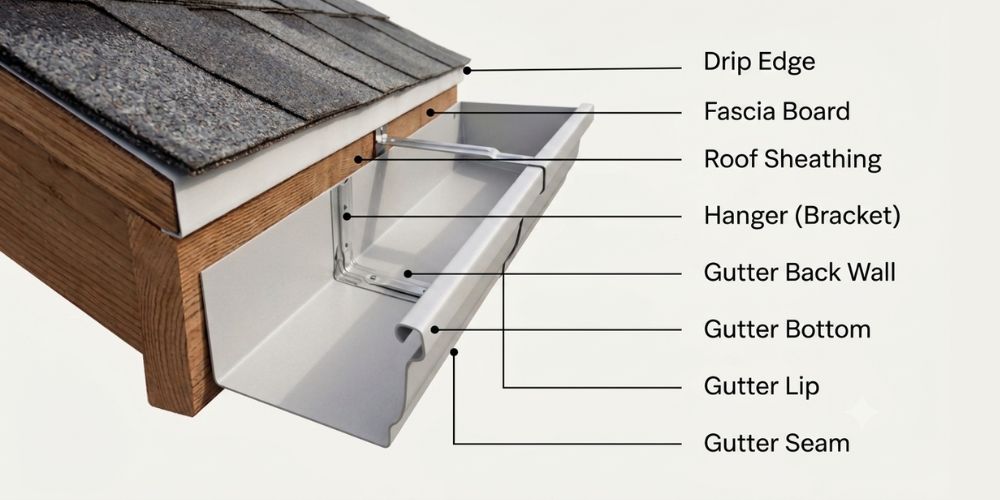
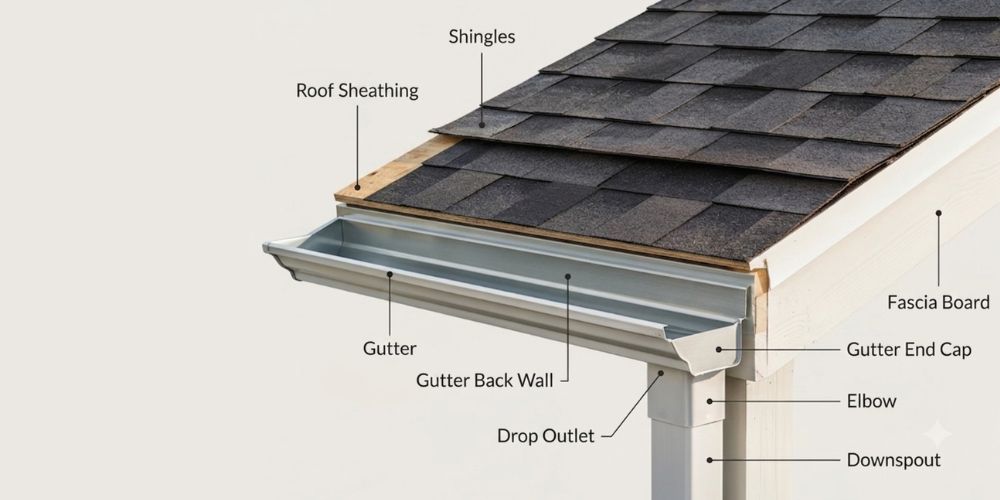
The gutter is the horizontal channel that runs along your roofline. It catches water, leaves, and debris as they run off the shingles and channels everything toward the downspout. This is the part most people mean when they say “gutter,” even though it’s really just one piece of the full system.
There are several types of rain gutters to choose from, and the right one depends on your roof size, rainfall, and budget.
Back Wall
The back wall is the vertical section of the trough that sits flush against the fascia board. It’s what the hangers clip or screw into, so if this section corrodes or bends, the whole gutter loses its grip on the house.
Gutter Bottom
The gutter bottom is the flat base of the channel where water actually flows before reaching the downspout. It’s also where debris and standing water build up first, which makes it the most common spot for rust and pinhole leaks to start.
Gutter Lip
The gutter lip is the rolled or curved front edge of the trough. It adds rigidity to the channel and gives hidden hangers a place to clip on, so a bent or damaged lip usually means the hanger attached to it isn’t holding properly either.
Seams
Seams are the joints where straight sections of gutter connect to each other along a run. Unlike miters, seams don’t turn a corner; they just extend the trough, which is why they’re sealed rather than shaped.
Seams vs. Miters. Both are joints, but seams connect straight sections in a line, while miters connect sections that change direction at a corner. If the leak is on a straight run, look at the seam. If it’s where the gutter turns, look at the miter.
Connective Hardware
End Caps
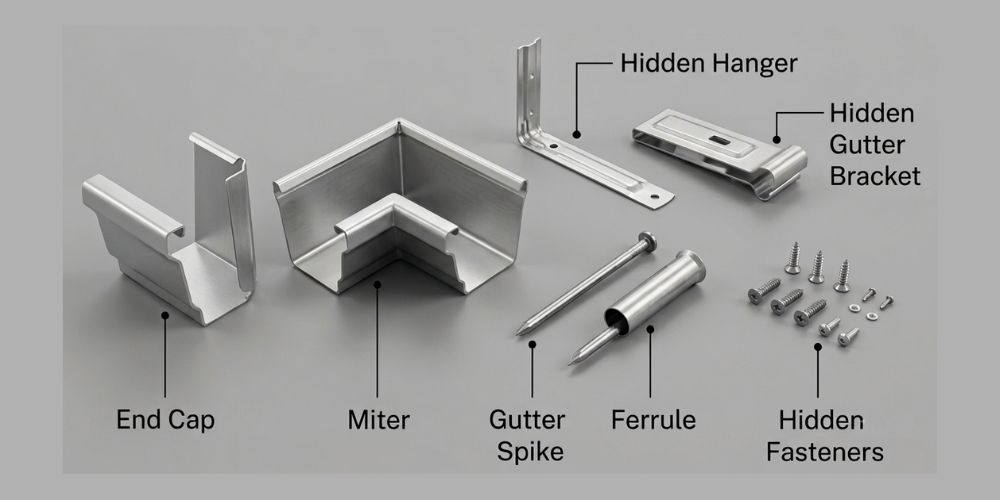
End caps seal off the open ends of a gutter run so water can’t spill out the sides. They’re fitted with rivets and sealed with gutter caulk, and because that seal is just adhesive, it’s usually the first thing to fail as a gutter ages.
Miters
Miters connect gutter sections at corners and reinforce the seam where they meet. They take more water pressure than a straight seam during heavy rain, since water naturally slows and pools at a turn, which is why miter leaks tend to show up before leaks anywhere else.
Hangers/Brackets
Hangers hold the gutter to the fascia board and keep it pitched at the right slope for drainage. There are several types of gutter hangers, and the modern hidden-hanger style is the standard because it’s discreet and easy to unclip for repairs, unlike older hardware that’s driven permanently into the gutter.
Gutter Spikes
Gutter spikes are long nails driven through the gutter and into the fascia to hold it in place. They’re an older method that’s largely been replaced by hangers, since spikes tend to work loose from the wood over years of expansion and contraction.
Ferrules
Ferrules are the small metal sleeves that sit inside the gutter and reinforce it where a spike passes through. Without a ferrule, a spike would just crush the trough as it’s driven in, so the two always work as a pair.
Hidden Fasteners
Hidden fasteners are the screws and rivets that hold gutter components together without being visible from the ground. They’re a small detail, but a loose or missing fastener is often the real cause behind a gutter that looks fine but rattles or shifts in wind.
Spikes and Ferrules vs. Hangers. Both hold the gutter to the house, but they’re different generations of hardware. Spikes and ferrules are the older, single-nail method; hangers are the modern two-piece bracket-and-clip system. If your gutters were installed decades ago, you likely have spikes. If they were installed recently, you likely have hangers.
The Drainage Path
Drop Outlet
The drop outlet is the fitting where the horizontal gutter meets the vertical downspout. It funnels collected water out of the trough and into the pipe, and because it’s the narrowest point in the whole system, it’s also the spot most likely to clog first.
Downspout
The downspout is the vertical pipe that carries water from the gutter down to the ground. A single downspout can typically handle water from about 30 to 40 feet of gutter, which is why longer rooflines usually need more than one.
Elbows
Elbows are the angled joints that let a downspout bend around obstacles like roof overhangs or window trim and route water where it needs to go. There are a few different gutter downspout elbow types, and most runs use two or three just to get from the roofline to the ground without hitting the house.
Pipe Cleats
Pipe cleats are the brackets that secure the downspout to the exterior wall so wind and heavy rain can’t pull it loose. A downspout without enough cleats will flex and rattle in storms, which stresses the elbows and joints above it.
Downspout Filter
A downspout filter is an in-line debris trap inside the downspout that catches what gets past the gutter and any guard above it. It’s a second layer of defense, not a replacement for a gutter guard, and it needs to be cleaned out on its own schedule.
Water Dispersal at Ground Level
Splash Block
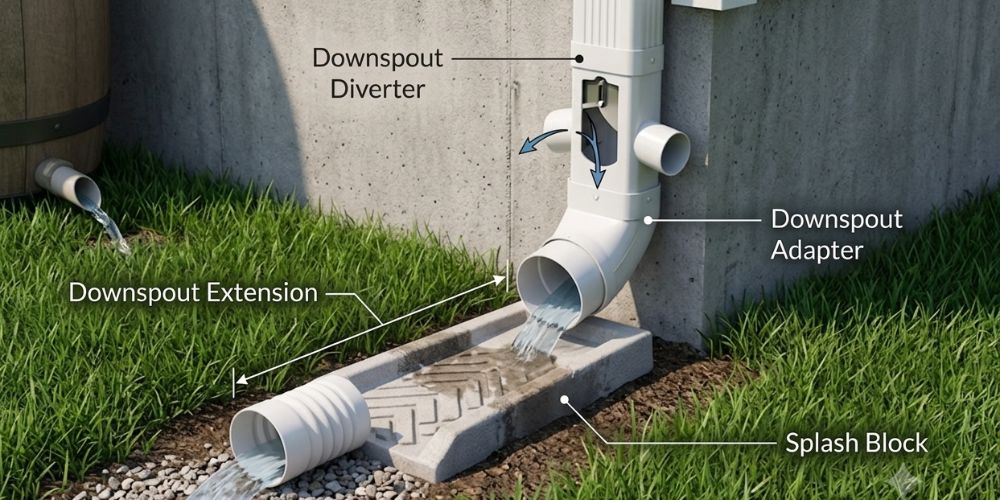
A splash block disperses water at the base of the downspout to protect the foundation from erosion and pooling. It works by spreading the flow out over a wider area right where it lands, rather than moving the water any real distance.
Downspout Extension
A downspout extension carries water further away from the foundation than the downspout alone would reach. This is the piece that actually relocates the water, whether a few feet with a simple attachment or much further with buried pipe.
Splash Block vs. Downspout Extension. A splash block spreads water out where it lands. An extension moves water somewhere else entirely. If your foundation is still getting wet right at the downspout, you likely need an extension, not just a splash block.
Downspout Adapter
A downspout adapter connects a rectangular downspout to round drain pipe for extended or buried drainage runs. It exists purely to bridge two mismatched shapes without leaking at the connection.
Y-Adapter
A Y-adapter merges two downspouts into one before draining to a single point, usually to simplify a yard’s drainage layout or route water to one buried line.
Downspout Diverter
A downspout diverter splits one downspout into two, sending water in two directions. It does the opposite job of a Y-adapter, and the two are sometimes confused simply because they look similar.
Protective Add-Ons
Gutter Guard
A gutter guard covers the gutter opening to block leaves and debris while letting water pass through. It protects the trough itself, sitting on top of the gutter where debris would otherwise collect.
If you’re weighing whether it’s worth it, here’s an honest look at whether gutter guards really work.
Fascia Board
The fascia board is the trim board along the roof edge that the gutter mounts to. It’s technically part of the roofing system, not the gutter itself, but the whole gutter system depends on it staying solid, since rotted fascia can’t hold hangers no matter how new the gutter is.
Drip Edge
Drip edge is metal flashing installed under the shingles at the roof’s edge that directs water into the gutter instead of behind it. It protects the roof deck and fascia from water intrusion before water ever reaches the gutter at all. Related gutter flashing issues are one of the most overlooked causes of hidden fascia rot.
Fascia Board vs. Drip Edge: Fascia is what the gutter physically mounts to. Drip edge is a thin metal strip that guides water off the roof and into the gutter in the first place. One is structural support, the other is water direction, and a home needs both working correctly for the gutter to do its job.
Gutter guard vs. downspout filter: A gutter guard sits on top of the trough and stops debris before it ever gets in. A downspout filter sits inside the downspout and catches whatever slipped past the guard. They’re not interchangeable. A home with heavy tree cover often benefits from both.
Gutter Materials Compared
| Material | Pros | Cons |
| Aluminum | Lightweight, rust-resistant, affordable | Dents with impact |
| Vinyl | Cheap, easy DIY install | Brittle in extreme cold or heat |
| Galvanized steel | Strong, handles heavy rainfall | Can rust over time |
| Copper | Long lifespan, high-end look | Expensive, develops a green patina |
Warning Signs Something’s Failing
- Sagging gutters: usually broken or loosened hangers
- Water overflowing the front edge: clogged trough or blocked drop outlet
- Leaks at corners: failed miter seal
- Water pooling near the foundation: missing or ineffective splash block/extension
- Detached downspout sections: worn-out pipe cleats
- Water stains on fascia: compromised drip edge or hidden leak behind the gutter
If you’re seeing more than one of these at once, it’s worth reviewing the 12 signs you need to replace your gutters before deciding between a repair and a full replacement.
Repair or Replace?
| Issue | Likely fix |
| Small holes, hairline cracks | Seal or patch |
| Loose hangers or brackets | Refasten or swap for hidden hangers |
| Rusted steel sections | Replace the affected run |
| Widespread sagging on aging vinyl | Full system replacement |
| Chronic overflow, wrong pitch | Reconfigure the slope or upsize the gutter |
FAQs
What are the corners of a gutter called?
Miters. They connect gutter sections at inside and outside corners and reinforce the seam.
What holds a gutter to the roof?
Hangers or brackets, sometimes paired with spikes and ferrules on older systems, all anchored into the fascia board.
What stops leaves from getting into the gutter?
A gutter guard fitted over the trough opening, sometimes backed up by a downspout filter further down the system.
What directs water away from the foundation once it leaves the downspout?
A splash block or downspout extension, and in some setups, an adapter or diverter that routes the flow further out.
The Bottom Line
Every part of a gutter system, down to the smallest ferrule, has one job: keep water moving away from your home instead of into it. When you know what each piece does, and how to tell it apart from the part it gets confused with, you can spot small problems before they turn into fascia rot, foundation cracks, or a full system replacement.