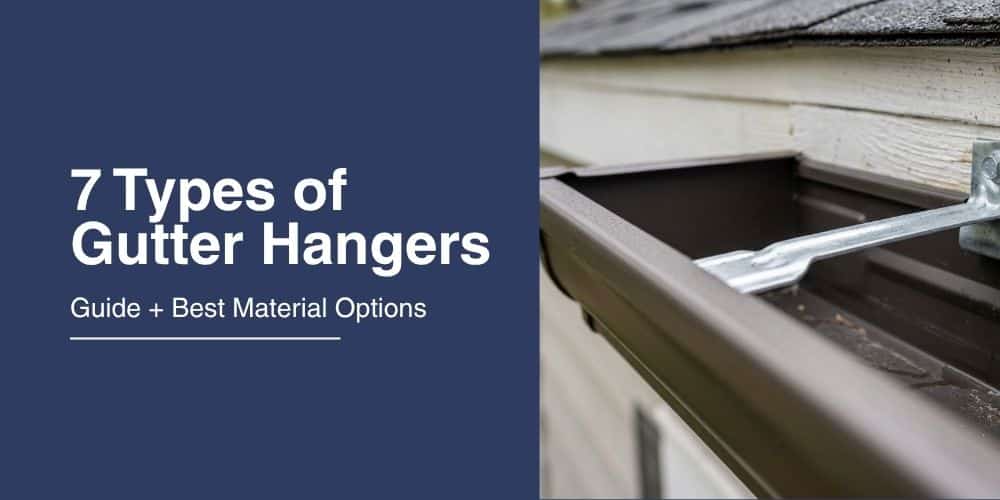
Gutter hangers are what hold your gutters in place. That’s the simple answer.
They attach the gutter to your fascia board and carry the full weight of rainwater, debris, and sometimes snow. If they fail, your entire gutter system fails with them.
In this guide, you’ll learn what gutter hangers are, why they matter, the 7 types of rain gutter hangers, and which materials actually last.
What Are Gutter Hangers?
A gutter hanger is the fastener that attaches your rain gutter to the fascia board (the board that runs along the edge of your roofline). It’s the link between your gutter system and your home, and it carries every drop of water that falls on your roof.
Think of gutter hangers as the skeleton of your gutter system. Without the right hangers, installed correctly, even the highest-quality gutters will sag, pull away from the house, leak at the seams, and eventually fail, often causing thousands of dollars in water damage to your foundation, siding, and landscaping.
They come in a range of styles, materials, and load ratings. Choosing the right type for your roof profile, local climate, and gutter style is one of the most important decisions in any gutter installation or replacement project for homeowners and contractors alike.
Quick DefinitionGutter hangers = the bracket, strap, spike, or clip system that holds your gutters to your home. Not all hangers are created equal. The difference between a failing gutter and a 30-year system often comes down to hanger selection and spacing. |
Why Gutter Hangers Matter More Than You Think
Here’s something most homeowners never realize: a gutter filled with water and debris can weigh over 20 pounds per linear foot. Add a few inches of snow or ice in northern states, and that number can triple. Your hangers are the only thing standing between that weight and a failed gutter system.
“A gutter system is only as strong as its weakest hanger. The gutter is the pipe, the hanger is the anchor.”
Faulty or improperly spaced gutter hangers lead to:
- Sagging gutters that pool water instead of draining it.
- Gutters that pull away from the fascia after the first heavy rainstorm.
- Leaking seams from stress caused by improper support.
- Fascia board rot when gutters tilt inward and trap moisture.
- Foundation flooding when water spills over rather than flowing to downspouts.
Note: In many cases, overflow issues are not just hanger-related but also tied to poor drainage design. Learn how to identify the problem in our guide on warning signs your downspout is the wrong size.
The right gutter hangers, spaced correctly, prevent all of this. Learn the recommended gutter hanger spacing for different climates and gutter systems.
All 7 Types of Rain Gutter Hangers Explained
There are seven primary types of gutter hangers used across residential and commercial installations in the US. Each has a unique profile, best-use scenario, and set of trade-offs.
Quick Overview:
| Type | Strength | Visibility | Best Use |
|---|---|---|---|
| Hidden Hangers | High | Hidden | Most homes |
| Spike & Ferrule | Low | Visible | Old systems |
| Fascia Brackets | High | Visible | Versatile |
| Straps | High | Visible | Half-round gutters |
| T-Bar | Very High | Visible | Snow areas |
| Wrap-Around | Very High | Visible | Wind areas |
| Roof-Strap | High | Visible | No fascia |
1. Hidden Hangers (Clip-Style)
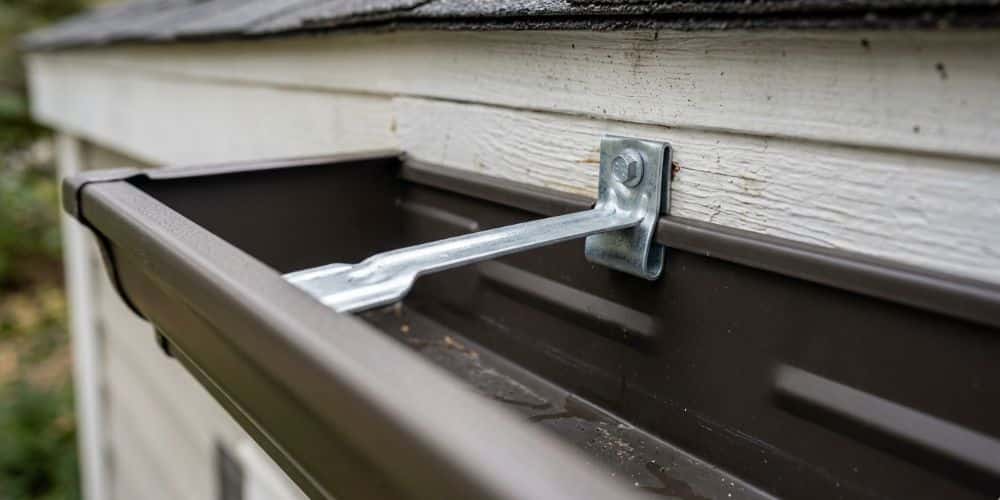
Hidden hangers sit inside the gutter trough and clip to the front lip and back edge. A screw is then driven through the hanger and into the fascia. From the ground, you see nothing just a clean, seamless gutter run.
This is the go-to choice for most professional installers today, especially for K-style gutters. They offer the best combination of strength, aesthetics, and long-term reliability.
| Best For | Pros: | Cons: |
|---|---|---|
| K-style and seamless gutters | Invisible from ground, strong water load capacity, clean aesthetic, doesn’t split the fascia | Slightly higher cost than spike systems, designed specifically for K-style profiles |
2. Spike and Ferrule
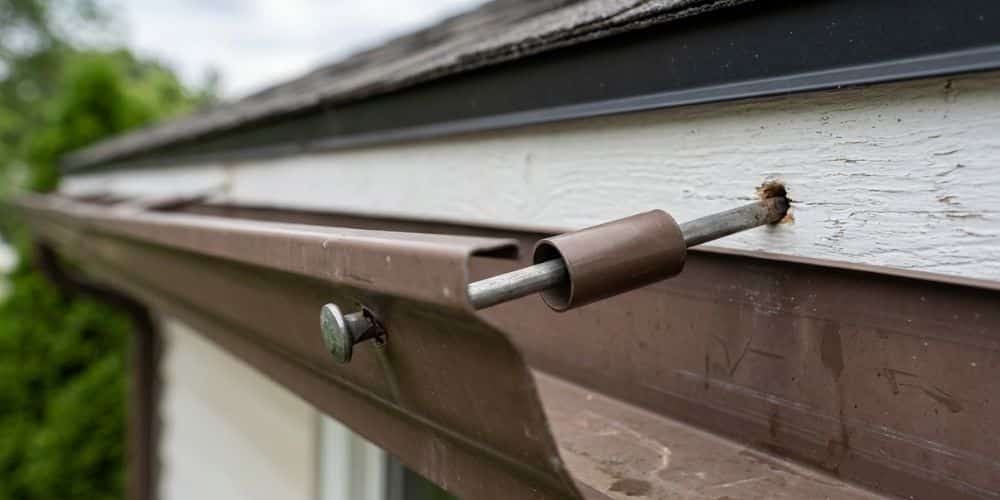
The old-school method a long aluminum or steel spike is hammered through a metal ferrule (a cylindrical sleeve) and into the fascia board. It was the industry standard for decades but is rarely used in new installs today.
The problem? Spikes loosen over time. Freeze-thaw cycles in northern climates expand and contract the wood, working the spike out year after year. Once loose, they’re nearly impossible to fix without replacement. This is one of the most common causes behind sagging systems. Here’s how to fix a sagging gutter properly.
| Best For | Pros: | Cons: |
|---|---|---|
| Nothing in new construction — legacy repair work only | Cheap, fast to install | Loosens over time, splits wood fascia, fails under repeated weather stress, not recommended for any new installation |
3. Fascia Bracket Hangers
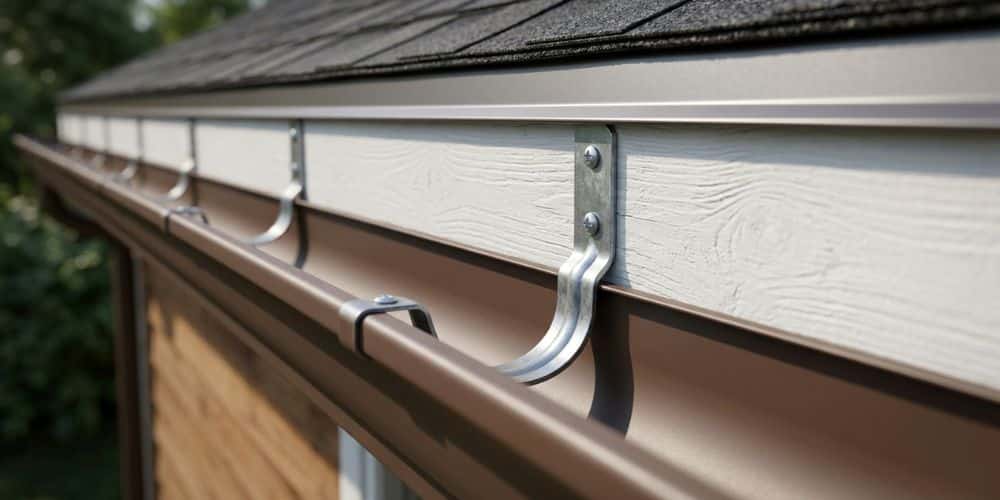
Fascia brackets mount directly to the fascia board from the outside. They cradle the gutter from below and secure it with a fastener. Compatible with both K-style and half-round gutter profiles.
These are particularly strong when properly installed because the gutter sits in a cradle rather than being held by a single attachment point. A good choice for regions with moderate-to-heavy rainfall.
| Best For | Pros: | Cons: |
|---|---|---|
| K-style and half-round gutters, moderate-to-heavy rainfall regions | Strong cradle support, compatible with multiple gutter styles, easy individual replacement | Visible hardware from ground level, involves more components than hidden hangers |
4. Exposed Brackets & Straps
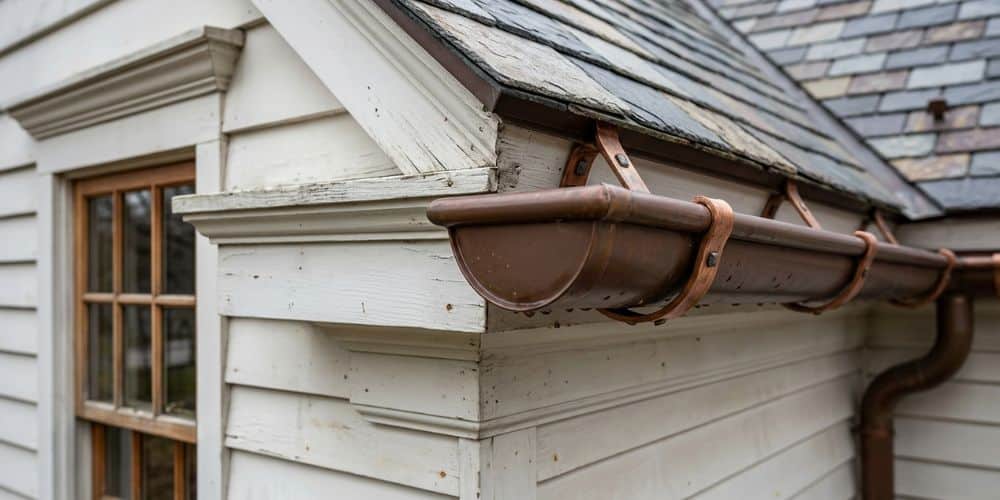
Commonly used with half-round gutters (popular in historic and colonial-style homes), these straps wrap around the outside of the gutter and fasten to the fascia or roof deck. They’re visible, but on the right home, they add a decorative, traditional look.
Extremely durable and resistant to weather stress because the strap distributes load across a wider surface area.
| Best For | Pros: | Cons: |
|---|---|---|
| Half-round gutters, historic and colonial-style homes | Beautiful on the right home, very durable, excellent for half-round profiles | Visible hardware, not appropriate for K-style gutters |
5. T-Bar / T-Strap Hangers

T-bar hangers use a horizontal bar across the top of the gutter opening to distribute weight evenly. They’re anchored to the roof deck or rafter, making them one of the strongest systems available, particularly effective in heavy-snow states like Michigan, Minnesota, and Maine.
If you’re in a zone that sees more than 20 inches of snow per winter, T-bar hangers should be on your shortlist.
| Best For | Pros: | Cons: |
|---|---|---|
| Heavy snow climates, long gutter runs, commercial applications | Superior load capacity, roof-deck anchoring, excellent for extreme conditions | More complex to install, higher labor cost, more hardware involved |
6. Wrap-Around Hangers
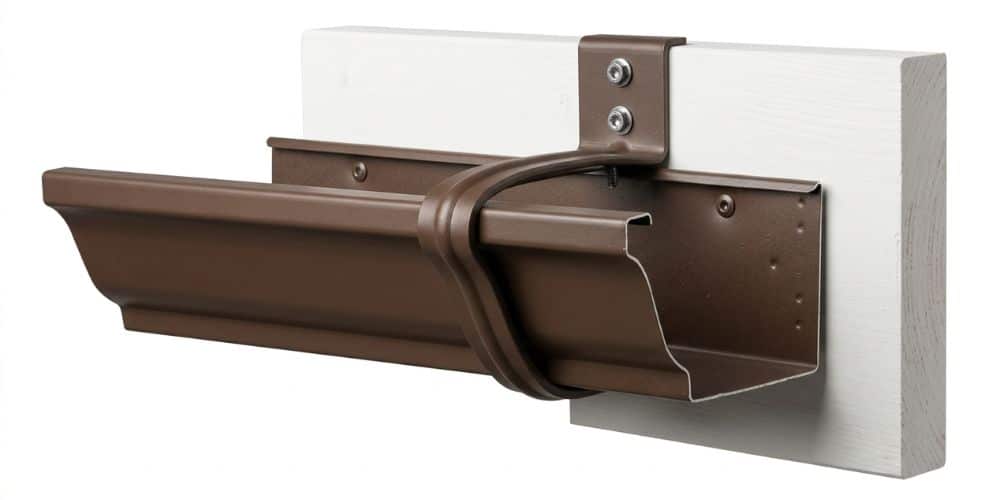
Wrap-around hangers literally wrap the full profile of the gutter, both the front lip and back edge, before fastening to the fascia. This creates a 360-degree grip on the gutter trough, making it extremely resistant to tipping or pulling away.
Great for areas with high wind events, such as the Gulf Coast or Atlantic states, where hurricane-force winds can put lateral stress on gutter systems.
| Best For | Pros: | Cons: |
|---|---|---|
| High-wind areas, coastal regions, storm-prone locations | Full 360° grip, wind-resistant, excellent for areas with severe weather events | Slower to install, more material involved, can be unnecessary in calm climates |
7. Roof-Strap Hangers (Subroof)
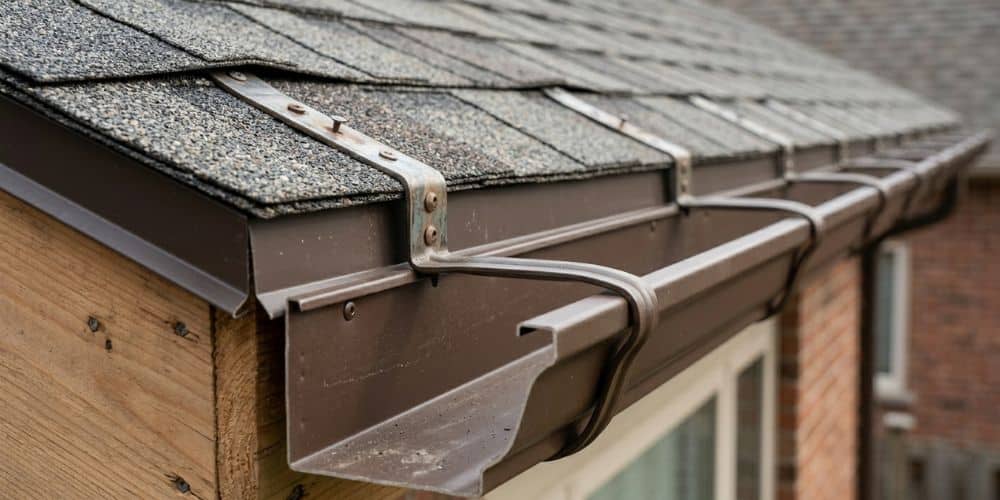
When a home has no fascia board, or when the fascia is too deteriorated to support a fastener, roof-strap hangers attach directly to the roof deck above the drip edge. A metal strap extends down and wraps around the gutter.
This is the right call on older homes, A-frame structures, or cedar shake roofs where traditional fascia mounting isn’t possible. Always make sure the shingles are lifted carefully to avoid cracking during installation.
| Best For | Pros: | Cons: |
|---|---|---|
| Homes without fascia, A-frame roofs, cedar shake or tile roofs | Strong roof-deck anchor, solves the no-fascia problem, good for non-standard roof structures | Risk of shingle damage if installed carelessly, requires more skill, must be properly sealed |
Best Materials for Gutter Hangers
Here’s a rule that most homeowners never hear: your gutter hanger material should match your gutter material. Mixing metals creates galvanic corrosion, where two dissimilar metals in contact with water degrade each other. It’s slow, silent, and devastating over time.
1. Aluminum Hangers
Best choice for most homes. Aluminum hangers are lightweight, rust-resistant, and the correct match for aluminum gutters, which are by far the most common residential gutter material installed in the US today. Cost runs $0.40–$1.00 per hanger, making this the most affordable and reliable option available.
2. Stainless Steel Hangers
The premium long-term option. Required for copper or steel gutters, and strongly recommended for any installation within a few miles of the coast where salt air dramatically accelerates corrosion on lesser metals. Costs more at $1.50–$3.00 per hanger, but stainless steel hangers routinely outlast the gutters themselves.
3. Galvanized Steel Hangers
Use with caution. A budget-friendly option that performs adequately in dry climates, but galvanization wears over time. In consistently wet regions, surface rust can appear within 10–15 years. Never pair galvanized hangers with copper gutters the galvanic reaction between these two metals is particularly aggressive.
Avoid: Mismatched MetalsNever pair copper gutters with aluminum hangers, or steel gutters with aluminum hardware. Within a few years, galvanic corrosion will eat away at the contact point and cause structural failure. |
Which Gutter Hanger Is Right for Your Home?
If you have standard K-style gutters that cover the vast majority of homes in San Antonio and the surrounding Hill Country, hidden hangers installed with quality screws are the right answer in almost every case. They’re strong, clean-looking, and built for the seamless gutter systems we install every day.
If you have half-round gutters on an older or architecturally distinctive home, exposed brackets and straps are both the practical and the aesthetically correct choice.
If you’re dealing with a home that has no fascia, an A-frame roofline, or severely deteriorated fascia that needs to be bypassed, roof-strap hangers or T-bar systems anchored higher into the roof structure are the right call.
And if you’re not sure, that’s exactly what we’re here for.
Final Thought
Gutter systems do not fail randomly. In most cases, failure begins at the hanger level. When the wrong type is used or spacing is inadequate, the system cannot handle the load it was designed for.
Choosing the right gutter hangers, using compatible materials, and ensuring proper installation creates a system that performs reliably for years. Ignoring these details almost always leads to early failure, no matter how good the gutters themselves are.
If you want your gutter system installed the right way from day one, the team at American Hill Country Gutters specializes in professional gutter installation, hanger selection, and long-term drainage solutions across Texas.