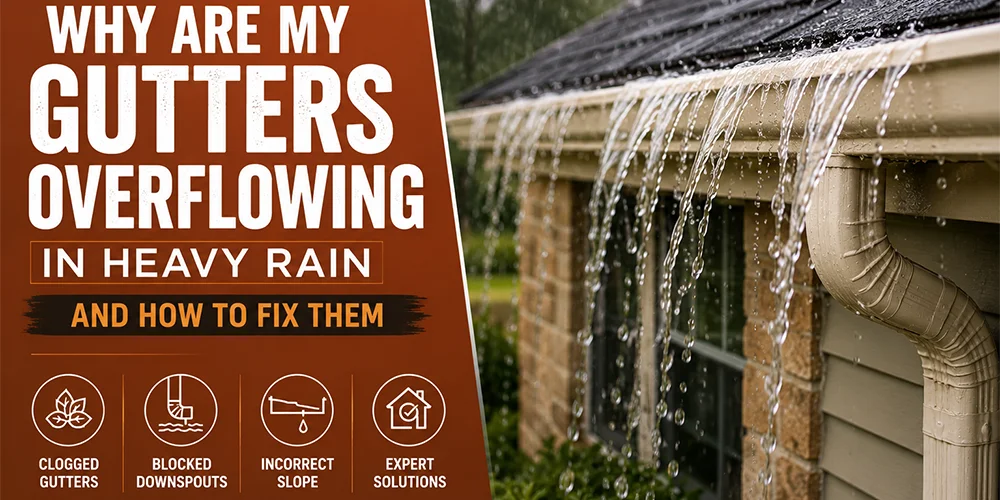
Heavy rainstorms are common throughout San Antonio and the Texas Hill Country. Your gutter system is designed to collect rainwater from your roof and direct it safely away from your home’s foundation. However, if your gutters overflow every time it rains, they aren’t doing their job properly.
Many homeowners assume overflowing gutters are simply the result of unusually heavy rainfall. In reality, gutter overflow usually points to an underlying issue that needs attention. Whether it’s clogged gutters, blocked downspouts, an improper gutter slope, or a system that’s too small for your roof, identifying the problem early can prevent expensive water damage.
In this guide, we’ll explain why gutters overflow during heavy rain, the most common causes, how to fix the problem, and what you can do to prevent it in the future.
Why Do Gutters Overflow During Heavy Rain?

Your gutters are designed to move thousands of gallons of rainwater away from your home every year. During heavy rainfall, water travels quickly from the roof into the gutter system before exiting through the downspouts.
When something interrupts that flow, water has nowhere to go except over the edge of the gutter.
Overflowing gutters aren’t just annoying. They can lead to roof leaks, damaged siding, foundation issues, soil erosion, and even mold growth around your home.
If your gutters only overflow during severe storms, your system may be undersized. If they overflow during every rainfall, there’s likely a maintenance or installation issue that should be addressed.
For a closer look at common overflow issues, read our guide on gutter overflow.
Common Reasons Gutters Overflow
1. Clogged Gutters
Leaves, twigs, pine needles, seed pods, dirt, and roof granules gradually build up inside gutters throughout the year.
As debris accumulates, the available space for rainwater becomes smaller. During heavy rainfall, water simply flows over the sides instead of moving toward the downspouts.
Common warning signs include:
- Water pouring over gutter edges
- Plants growing inside gutters
- Standing water after rainfall
- Birds nesting inside gutters
Cleaning your gutters regularly helps prevent these problems before they become expensive repairs.
2. Blocked Downspouts
Even perfectly clean gutters can overflow if the downspouts are blocked.
Leaves, mud, roofing debris, tennis balls, bird nests, and even wasp nests can prevent water from flowing through the downspout.
When water reaches the blockage, it backs up until it spills over the gutter edge.
If you suspect a blockage, check out our article on how to clear out a clogged downspout for additional maintenance tips.
3. Incorrect Gutter Slope
Every gutter system needs a slight pitch toward the downspouts.
If the gutters are too flat or have settled over time, rainwater begins pooling instead of draining properly.
Standing water eventually spills over the front or back of the gutter.
Signs include:
- Water sitting inside gutters after rain
- Rust forming in certain areas
- Overflow occurring in the middle of the gutter
Proper installation is critical for long-term performance. Learn more about the importance of the correct rain gutter slope and how it affects drainage.
4. Gutters Are Too Small
Older homes often have gutter systems that were installed decades ago.
As roofing materials and drainage requirements have changed, many homes simply need larger gutters.
Homes with:
- Large roof areas
- Steep roof pitches
- Metal roofing
- Multiple roof valleys
Often benefit from upgrading to 6-inch or even 7-inch seamless gutters that can handle higher water volumes.
5. Not Enough Downspouts
Downspouts remove water from your gutter system.
If there aren’t enough downspouts, rainwater builds up faster than it can drain.
Adding another downspout is often a simple solution that significantly improves water flow.
6. Damaged or Sagging Gutters
Loose fasteners, bent sections, and sagging gutters create low spots where water collects.
Instead of flowing smoothly toward the downspouts, water remains trapped until the gutter overflows.
Routine inspections can identify these issues before they worsen.
7. Heavy Rainfall Beyond System Capacity
Texas storms can produce intense rainfall in a short period of time.
Even a well-maintained gutter system has limits.
If your gutters consistently overflow despite being clean and properly installed, it may be time to upgrade to a larger seamless gutter system.
What Damage Can Overflowing Gutters Cause?
Ignoring overflowing gutters can result in significant damage throughout your property.
Roof Damage
Overflowing water can work its way beneath shingles, causing roof leaks, wood rot, and costly structural repairs.
Foundation Problems
Water pooling around your home’s foundation can lead to cracks, settling, and moisture intrusion.
Damaged Landscaping
Overflowing water washes away mulch, flower beds, grass, and topsoil.
Fascia and Soffit Rot
Constant exposure to water weakens the wooden boards supporting your gutter system.
Mold and Mildew
Excess moisture around your home creates ideal conditions for mold growth and mildew.
How to Fix Gutters That Overflow During Heavy Rain
Fortunately, many gutter overflow issues can be resolved without replacing the entire system.
Clean the Gutters
Remove leaves, twigs, dirt, and debris at least twice each year.
Homes surrounded by mature trees may require cleaning three or four times annually.
Flush the Downspouts
Use a garden hose to ensure water flows freely through every downspout.
If water backs up, remove the blockage before the next storm.
Repair Loose Sections
Replace damaged hangers, tighten loose brackets, and seal leaking joints.
Install Gutter Guards
High-quality gutter guards reduce debris buildup while allowing rainwater to flow freely.
Although they don’t eliminate maintenance entirely, they greatly reduce cleaning frequency.
Upgrade Your Gutter System
If your current gutters can’t handle heavy rainfall, replacing them with seamless aluminum gutters provides improved capacity, fewer leaks, and better long-term performance.
How to Prevent Gutters from Overflowing
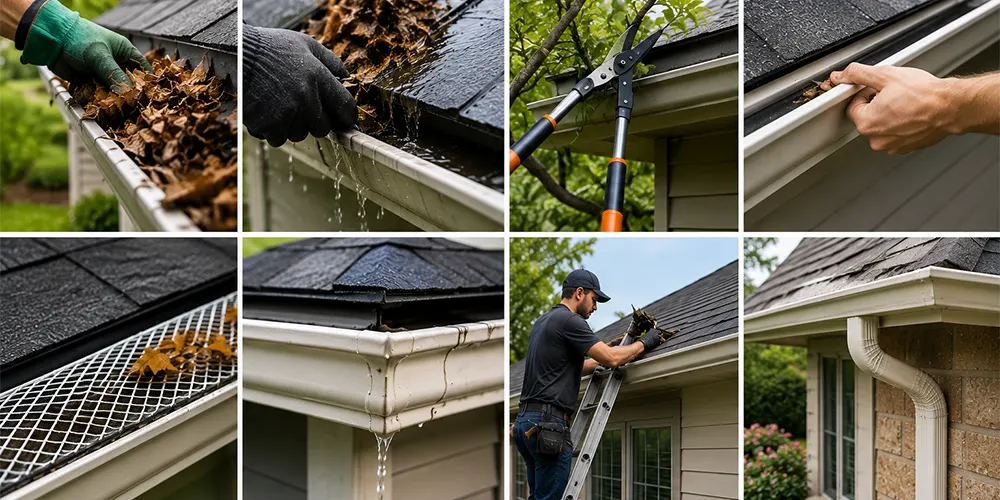
Preventative maintenance is the easiest way to avoid gutter problems.
Here are several simple ways to protect your home:
- Clean gutters twice each year.
- Remove debris after major storms.
- Trim tree branches above your roof.
- Inspect gutters every spring and fall.
- Install gutter guards.
- Repair leaks immediately.
- Schedule professional gutter inspections.
Regular maintenance extends the life of your gutter system while reducing repair costs.
When Should You Replace Your Gutters?
Sometimes repairs simply aren’t enough.
You should consider replacing your gutters if you notice:
- Frequent overflow despite cleaning
- Rust and corrosion
- Large cracks
- Separated joints
- Sagging sections
- Gutters pulling away from the fascia
- Water damage around your foundation
Modern seamless gutters provide better performance, require less maintenance, and offer a cleaner appearance than traditional sectional gutters.
Trust American Hill Country Gutters for Reliable Gutter Solutions
Overflowing gutters are more than a nuisance. They can lead to expensive repairs that affect your roof, siding, landscaping, and foundation. The key is identifying the cause early and choosing the right solution before minor issues become major problems.
At American Hill Country Gutters, we have more than 18 years of experience helping homeowners across San Antonio, Boerne, New Braunfels, Spring Branch, Bulverde, Canyon Lake, and the Texas Hill Country protect their homes with professionally installed seamless gutter systems.
Whether you need gutter repairs, seamless gutter installation, gutter guards, or a complete system replacement, our experienced team will recommend the best solution for your home and budget.
Contact American Hill Country Gutters today to schedule a professional gutter inspection and ensure your gutter system is ready for the next Texas storm.