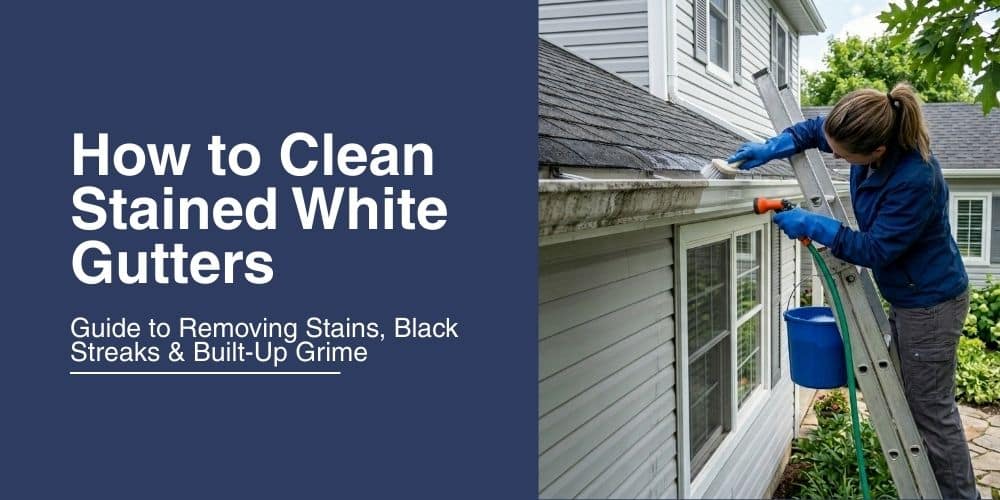
White gutters can be fully restored, but only when the cleaning method matches the stain type. Surface dirt comes off easily, but tiger stripes and oxidation require targeted treatment.
In this guide, we break down why white gutters stain, what products actually work, and how to clean them safely without damaging aluminum or vinyl.
Why White Gutters Turn Black or Yellow
Most homeowners assume black streaks are mold. In most cases, they are not.
1. Tiger Stripes (Electrostatic Carbon Bonding)
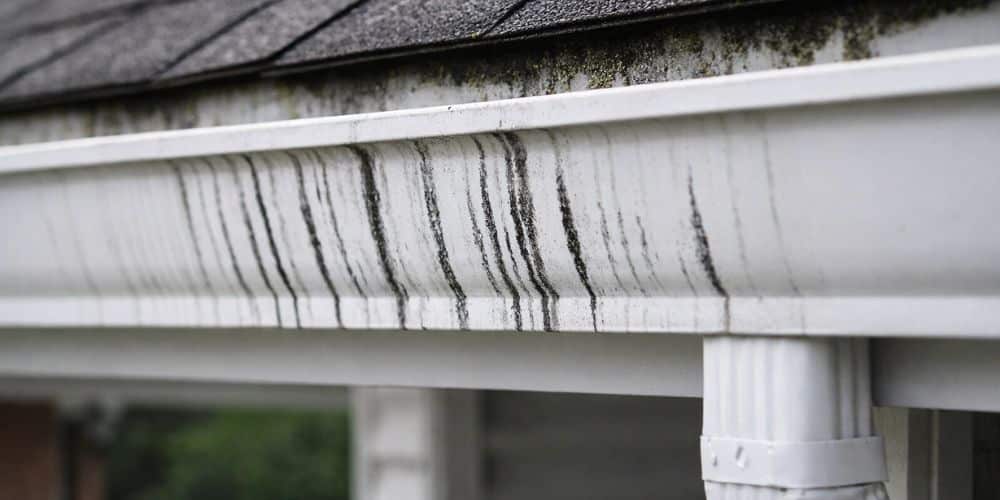
When rainwater flows off asphalt shingles, it carries microscopic asphalt particles and carbon residue. Over time, these particles bond to oxidized aluminum through electrostatic attraction.
The International Association of Certified Home Inspectors explains that asphalt shingles naturally shed granules as they age. That runoff contributes significantly to gutter staining.
This is why basic soap often fails, the stain is chemically adhered to the surface.
2. Oxidation (Chalky White Film)
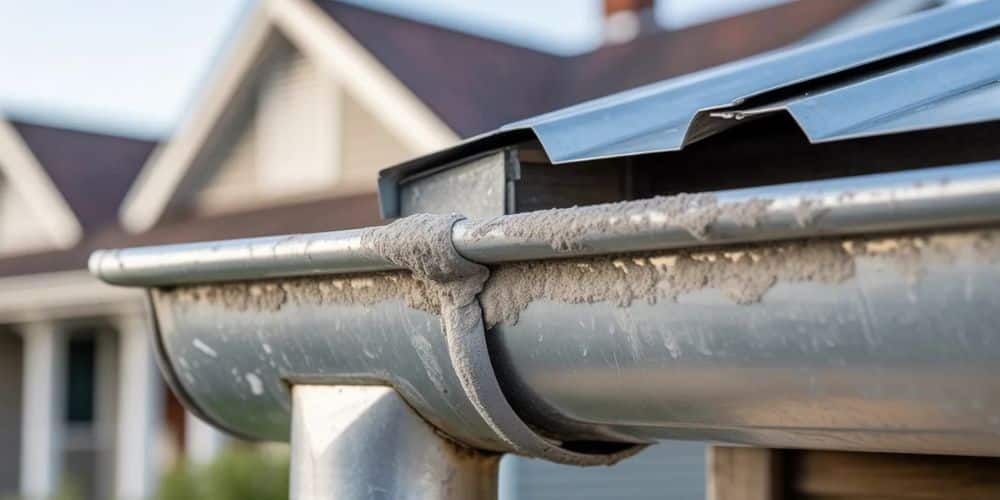
Aluminum reacts with oxygen and moisture, forming aluminum oxide, a dull, chalky layer.
This is a documented corrosion process explained in the technical oxidation overview. Oxidation is not dirt sitting on the surface; it is a reaction within the metal itself.
It cannot simply be “washed off.” It must be chemically reduced or lightly abraded with care.
3. Organic and Environmental Stains
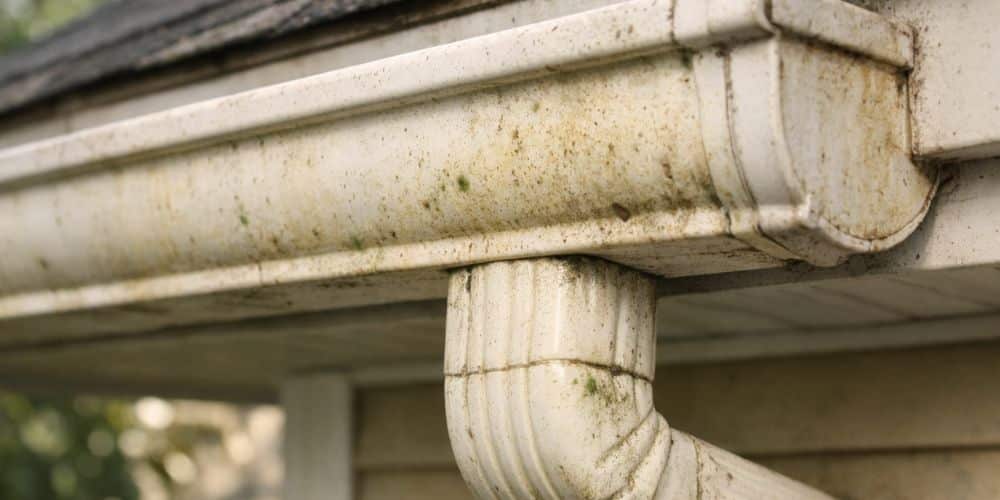
Pollen, mildew, algae, and debris create yellowing and surface grime. These stains are typically easier to remove than bonded carbon streaks.
What to Use to Clean White Gutters (Based on Stain Type)
One of the biggest mistakes online guides make is recommending a single solution for every problem. That approach wastes time and can damage finishes.
| Stain Type | Primary Cause | Most Effective Solution | What to Avoid |
| Light dirt | Dust & pollen | Warm water + mild dish soap | Steel wool |
| Tiger stripes | Asphalt runoff | Dedicated black streak remover | Vinegar alone |
| Oxidation | Metal reaction | Aluminum-safe oxidation remover | Straight bleach |
| Mold/Mildew | Organic growth | Diluted bleach (controlled use) | Mixing chemicals |
Before applying any cleaner, ensure ladder safety. The CDC reports falls as a leading cause of home injury, with ladders being a major contributor.
Best Way to Clean White Gutters (Step-By-Step)
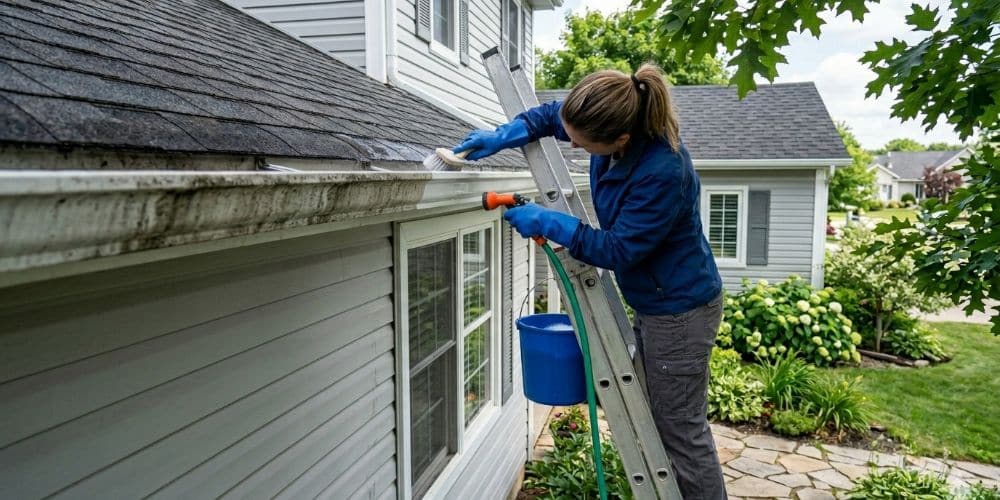
Cleaning white gutters correctly is about sequence and accuracy. Scrubbing harder does not produce better results. Using the correct process and matching the cleaner to the stain type prevents permanent finish damage and recurring streaks.
Here is the method that delivers consistent results.
Step 1: Clear Interior Debris First
Remove all leaves, sludge, and standing water from inside the gutter before cleaning the exterior surface.
If debris remains inside, dirty runoff will spill over the front edge during cleaning and immediately stain the surface again. This is one of the most common reasons streaks reappear.
Step 2: Identify the Stain Type
Accurate identification determines the cleaner you should use.
| What You See | What It Indicates | Correct Treatment |
| Vertical black streaks | Tiger stripes caused by roof runoff | Carbon or black streak remover |
| Chalky white residue | Oxidation of aluminum | Aluminum safe oxidation remover |
| Yellow or brown film | Organic buildup, such as pollen or mildew | Mild detergent solution |
Tiger stripes are bonded carbon particles from asphalt shingles.
Oxidation is a chemical reaction within the metal surface.
Both require different treatment approaches.
Step 3: Pre-Rinse With Controlled Water Flow
Rinse the surface with low-pressure water to remove loose grime before applying cleaner.
Avoid high-pressure spraying. The U.S. Consumer Product Safety Commission warns that improper pressure washer use can cause structural damage and serious injury.
Strong pressure is rarely necessary for exterior gutter cleaning.
Step 4: Apply Cleaner in Small Sections
Work in sections of three to four feet at a time. Allow proper dwell time so the cleaner can break down bonded residue.
Dwell time is critical. If the product is rinsed too quickly, it cannot loosen the stain effectively. Do not allow the cleaner to dry on the surface.
Step 5: Use Gentle Mechanical Agitation
Use a soft nylon brush or microfiber cloth.
Avoid steel wool or abrasive pads. Aggressive scrubbing removes the factory finish and accelerates oxidation. If heavy pressure is required, the cleaner is likely incorrect for the stain.
Step 6: Rinse Thoroughly and Inspect
Rinse completely to remove all chemical residue.
After drying, inspect for remaining streaks or oxidation haze. If staining persists after proper treatment, the finish may be permanently altered by oxidation.
How to Clean Stained White Gutters (When Basic Cleaning Fails)
If staining remains after normal washing, you are likely dealing with deeper bonding or advanced oxidation.
For Tiger Stripes:
- Use a commercial streak remover labeled safe for aluminum.
- Apply with sa ponge.
- Rinse promptly.
- Repeat once if necessary.
For Oxidation:
- Use an oxidation remover.
- Lightly buff using a non-abrasive material.
- Understand that severe oxidation may not fully reverse.
At a certain stage, oxidation permanently alters the finish.
Tips to Clean White Gutters on a House Safely
Cleaning white gutters on a single-story home is relatively straightforward. On a two-story house, the risk increases significantly and should not be underestimated.
According to the U.S. Bureau of Labor Statistics, falls remain one of the leading causes of fatal occupational injuries, with ladder incidents contributing heavily.
Follow these safety guidelines:
1. Use a Stable, Rated Ladder
Choose an extension ladder rated for your weight and equipment. Ensure it sits on firm, level ground.
2. Install Ladder Stabilizers
Stabilizers prevent sideways movement and reduce the risk of damaging the gutter edge.
3. Never Overreach
Keep your belt buckle between the ladder rails. If you cannot comfortably reach an area, climb down and reposition.
4. Avoid Wind or Wet Conditions
Wind shifts the ladder balance. Wet rungs increase slipping risk.
5. Do Not Lean on the Gutter
Gutters are not designed to support body weight. Leaning can cause bending or separation from the fascia.
If the gutters are above the roofline, the pitch is steep, or you feel unstable at any point, professional cleaning becomes a safety decision, not just a convenience.
How Often Should White Gutters Be Cleaned?
| Property Condition | Cleaning Frequency |
| Minimal tree cover | Twice per year |
| Heavy tree exposure | Every 3–4 months |
| Storm-prone region | After major storms |
| With gutter guards | Inspect twice yearly |
Routine maintenance prevents severe bonding and reduces oxidation buildup.
When Cleaning Is No Longer Effective
Cleaning becomes temporary maintenance when structural degradation begins.
Replacement should be considered if you see:
- Peeling finish
- Deep pitting corrosion
- Persistent streaking despite treatment
- Leaks or sagging sections
Modern seamless systems reduce seam staining and improve long-term performance.
Conclusion
Cleaning white gutters successfully comes down to three things: identifying the stain correctly, using the proper cleaner, and following a controlled process. When done methodically, most black streaks and surface buildup can be significantly improved without damaging the finish.
If your gutters are heavily oxidized, sagging, or showing signs of structural wear, it may be time to consider an upgrade. American Hill Country Gutters specializes in seamless gutter installation and gutter guard systems designed to reduce staining and long-term maintenance, helping protect your home year after year.