
The best time to clean your gutters is early fall and early spring. If you are a homeowner in the Texas Hill Country or San Antonio area, sticking to that twice-yearly schedule is one of the simplest ways to protect your home from expensive water damage.
If you have been wondering when to clean gutters, how often to clean them, or whether timing even matters, this guide covers everything you need to know, including what is unique about cleaning gutters in Texas.
When Should You Clean Your Gutters? Quick Answer
| Season | When to Clean | Why It Matters |
|---|---|---|
| Early Fall | Before peak leaf drop (Oct–Nov in Texas) | Remove dry debris before it turns soggy and heavy over winter |
| Early Spring | After last frost (Feb–Mar in Texas) | Clear pollen and winter buildup before spring rainy season |
| After Major Storms | Within 1–2 days after heavy wind or rain | Storm debris clogs gutters fast |
| With Gutter Guards | Once per year minimum | Fine particles and pollen still accumulate over time |
How Often Should You Clean Your Gutters?
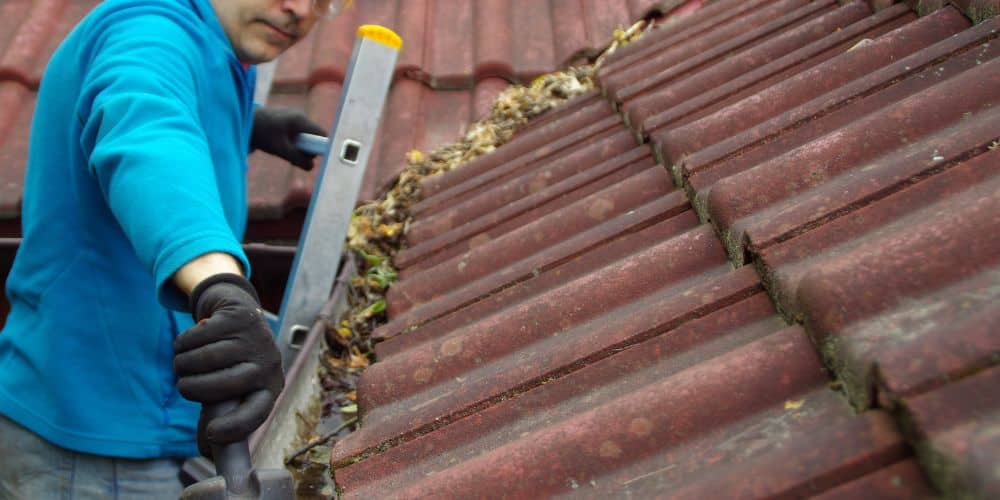
Twice a year is the standard recommendation, and for most homes, that is genuinely enough. But if you have ever stood in your yard in October and looked up at your gutters stuffed with a season’s worth of oak leaves, you already know that “standard” does not always apply.
Here is a more honest way to think about it:
Clean twice a year if:
- Your home has minimal tree coverage
- You are in a drier area with infrequent storms
- You already have gutter guards installed
Clean 3 to 4 times a year if:
- You have large oak, pecan, or pine trees hanging over your roofline
- You went through a rough storm season with heavy wind and rain
- You have already noticed sagging gutters, overflow stains on your siding, or water pooling near your foundation
Here in the Texas Hill Country, oak pollen season alone is enough to clog gutters faster than most people expect. Those sticky yellow-green strings that coat every car and porch in spring? They end up in your gutters too, packing together into a thick paste that water cannot get through. If you have never cleaned gutters after an oak pollen season in Central Texas, you are in for a surprise the first time you do.
Best Time to Clean Gutters in Fall

Fall is the big one. If you only do one cleaning a year (and you really should do two), make it fall.
The timing within the season matters more than people realize, though. Clean too early in fall and your gutters fill right back up within two weeks when the next wave of leaves drops. Clean too late and you risk debris and standing water freezing inside the system over winter.
For most Hill Country and San Antonio homeowners, the sweet spot is mid to late November, after the first major leaf drop from live oaks, cedar elms, and pecan trees but before any hard freeze rolls in.
According to the Insurance Information Institute, water damage and freezing are among the most common and costly homeowner insurance claims in the country. Clogged gutters that trap ice and standing water are a direct contributor to those claims. Nobody wants to learn that lesson firsthand.
At the start of fall, leaves are still dry and light. They scoop out easily and bag up fast. Wait a few more weeks after a rain, and you are digging out a heavy, soggy, slightly composting mess that takes three times as long to clear. Do it while it is easy.
Best Time to Clean Gutters in Spring
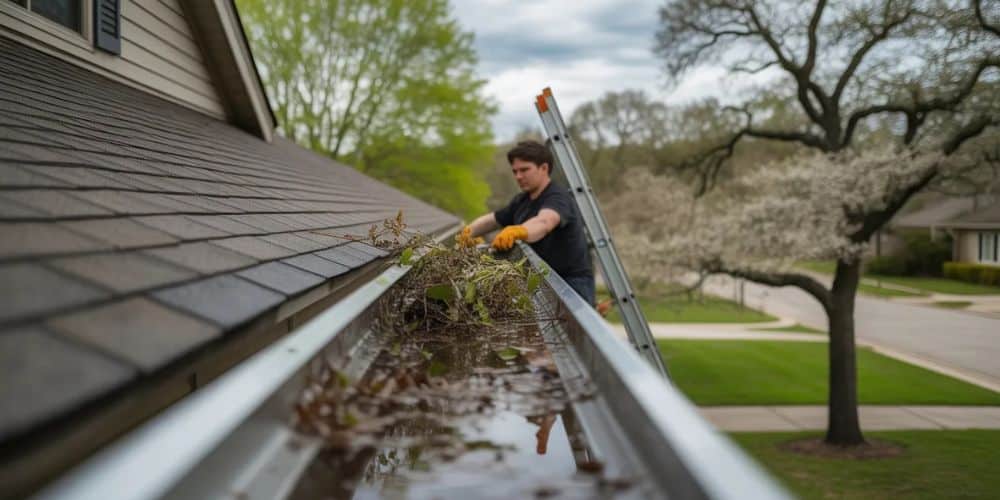
Spring cleaning is the one that often gets skipped, and that is a mistake.
In Central Texas, the window to aim for is February through April, right before the heaviest rainfall months hit. Here is why that timing matters:
This window is especially important because:
- Oak pollen season (February through April) deposits thick, sticky buildup that traps other debris and blocks downspouts
- Spring storm season brings sudden, heavy rainfall that overwhelmed clogged gutters cannot handle
- Winter debris including twigs, dead leaves, and windblown material needs to be flushed before it decomposes and begins corroding your gutters
Spring is also when you will catch any damage from winter. A surprise freeze, a windy night, an ice event nobody was quite prepared for. Walk around and look at your gutters in early spring with fresh eyes. Are any sections pulling away from the fascia? Any visible cracks or rust spots? A small fix caught in February costs a fraction of what the same problem costs in July when water has been getting behind your siding for four months.
Warning Signs Your Gutters Need Cleaning Right Now
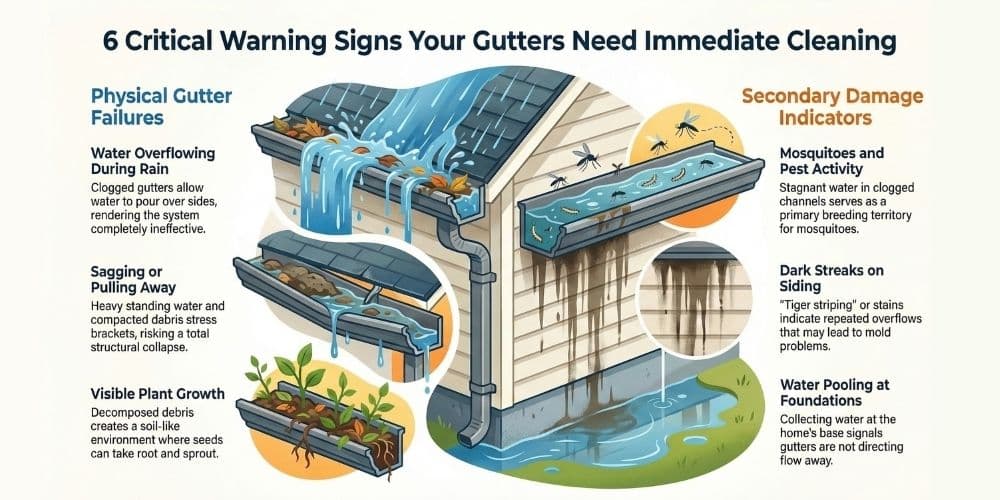
Sometimes the schedule does not matter. Your gutters are telling you something needs attention now. Here is what to look for:
Water Overflowing During Rain:
This is the obvious one. If water is pouring over the sides of your gutters during a rainstorm, like they are not even there, they are clogged. Not partially clogged. Clogged.
Gutters Sagging or Pulling Away from the House:
Gutters that are visibly drooping or separating from the roofline are carrying way more weight than they were designed to handle. That is standing water and compacted debris, stressing the brackets and fascia board. Left alone, it only gets worse, and eventually the whole section comes down. A neighbor learned this the hard way after a heavy rainstorm pulled a 20-foot section clean off the side of his house.
Plants Growing Out of Your Gutters:
Yes, this happens. If there is enough decomposed debris sitting in your gutters long enough, seeds will take root, and small plants will start growing. If you can see greenery sprouting from your gutters from the driveway, that is beyond overdue.
Mosquitoes All Around Your Roofline:
Standing water in clogged gutters is prime mosquito breeding territory. The EPA’s guidance on mosquito control confirms that eliminating standing water around the home is the single most effective way to reduce mosquito populations. If you are getting eaten alive every time you step outside, check your gutters before you call a pest control company.
Dark Streaks or Staining Running Down Your Siding:
Those streaks are not just ugly. They are evidence that water has been overflowing repeatedly, and some of it has been getting behind your siding. That is a mold problem waiting to happen.
If your gutters are white and showing black or gray tiger striping along the front face, that is a separate but equally common issue worth addressing. Take a look at our guide on how to clean white gutters for the right approach without scratching or fading the surface.
Water Pooling at Your Foundation After Rain:
If water is collecting at the base of your home after every rainfall, your gutters are not doing their job. This one deserves immediate attention because foundation repairs in Texas are not cheap.
What Happens If You Don’t Clean Your Gutters?
These are predictable, well-documented outcomes of neglected gutters:
Foundation Damage:
Overflowing water saturates the soil around your foundation, leading to settling, cracking, and in serious cases, structural failure. The American Society of Civil Engineers notes that expansive and moisture-affected soils are among the leading causes of residential foundation movement in Texas. Foundation repairs in Texas routinely cost $5,000 to $15,000 or more.
Roof Damage:
Clogged gutters add excess weight to the roof edge and cause water to back up under shingles, accelerating wear and increasing the risk of leaks. According to the National Roofing Contractors Association, routine gutter maintenance is one of the most important and overlooked components of overall roof care.
Fascia Board Rot:
When water repeatedly overflows and runs behind the gutter, it soaks the wooden fascia board that the gutter is mounted to. Rotted fascia causes the gutter to lose its anchor point and begin pulling away from the home.
Mold and Mildew Inside Walls:
Water that finds its way behind siding and into wall cavities creates ideal conditions for mold growth. The EPA’s mold guidance for homeowners confirms that moisture intrusion is the primary driver of indoor mold problems, which are both a serious health concern and costly to remediate.
Complete Gutter System Failure:
When gutters fill with heavy, waterlogged debris, the constant strain on brackets and fascia boards eventually causes the entire system to pull loose from the home. Most common gutter repairs trace directly back to prolonged neglect.
Why You Should Avoid Cleaning Gutters in Summer or Winter in Texas
You can technically clean gutters in summer or winter, but Texas makes both impractical and potentially dangerous.
Summer: Temperatures in the Hill Country regularly exceed 100°F between June and September. Working on a ladder in direct heat creates a real risk of heat exhaustion. The CDC warns that outdoor workers exposed to high heat and humidity face a significantly elevated risk of heat-related illness, even during short periods of physical exertion. Metal gutter surfaces and roofing materials also become dangerously hot to the touch.
Winter: While Texas does not experience sustained hard freezes, when ice events occur, conditions deteriorate quickly. Ice on ladder rungs, frozen metal surfaces, and icy rooflines dramatically increase fall risk. Cold temperatures also make it harder to properly inspect flexible gutter joints and sealants.
Sticking to early fall and early spring keeps you safe, comfortable, and effective.
Should You Clean Gutters Yourself or Hire a Professional?
DIY gutter cleaning is manageable for single-story homes with a stable ladder and basic tools. You will need a sturdy extension ladder, rubber-coated work gloves, a gutter scoop or small trowel, a bucket or tarp, and a garden hose to flush the downspouts.
Also Read: Top 5 Best Tools for Cleaning Your Gutters
Consider hiring a professional if:
- Your home is two stories or has a steep pitch
- You are uncomfortable on ladders or have any balance concerns
- Gutters have not been cleaned in more than a year
- You want a cleaning and inspection combined in one visit
The Consumer Product Safety Commission reports that ladders are involved in an estimated 300 deaths and 164,000 emergency room injuries in the United States each year. For multi-story homes or unfamiliar rooflines, hiring a professional is the safer and more practical choice.
A professional gutter cleaning also includes a full inspection. An experienced technician will identify loose hangers, cracks, rust, improper pitch, and downspout blockages that are not visible from the ground. Finding a small problem during a routine cleaning is far less expensive than discovering a major one during a storm.
Gutter Leaf Guards: Are They Worth It?
If climbing a ladder twice a year is not something you want to do, gutter leaf guards are a smart long-term investment. These metal mesh or screen covers sit over the top of your gutters, blocking leaves, twigs, and most debris while allowing water to flow freely through the system.
Benefits for Texas homeowners:
- Dramatically reduces the frequency and difficulty of cleaning
- Particularly effective against large debris like oak leaves and pecan shells
- Reduces standing water that attracts mosquitoes
- Extends the overall lifespan of your gutter system
Even with gutter guards installed, a professional inspection and light cleaning once a year is still recommended. Fine debris like pollen, roof grit, and seed pods can work past the screen over time. But the overall maintenance burden is significantly reduced compared to unprotected gutters.
Your Texas Gutter Cleaning Schedule at a Glance
February through April (Early Spring): Clean and flush gutters after winter. Clear oak pollen buildup and wintertime debris. Inspect for freeze damage, loose hangers, or sagging sections. Open downspouts and flush with water to confirm proper drainage.
October through November (Early-to-Mid Fall): Clean after the first major leaf drop but before freezing temperatures arrive. This is the most important cleaning of the year for Texas homeowners. Remove dry debris while it is still lightweight and easy to handle.
After any major storm: Do a visual inspection from the ground. Look for debris accumulation, overflow marks, or displaced gutter sections. Flush downspouts if accessible.
Annually (if you have leaf guards): Inspect and flush guards at least once a year to clear pollen and fine particles that accumulate behind the screen.
Protect Your Home Starting With Your Gutters
Gutters are not a glamorous home improvement topic. Nobody gets excited to talk about them at a dinner party. But they are one of the hardest-working parts of your home, and when they fail, the consequences show up in places you really do not want water: your roof, your walls, your foundation.
Cleaning them twice a year, at the right times, is genuinely one of the highest-return maintenance habits a Texas homeowner can build. It costs almost nothing compared to what it prevents.
American Hill Country Gutters serves homeowners throughout the Texas Hill Country and the San Antonio area. Contact us today to schedule your professional gutter cleaning or ask about our gutter guard installation options.