

Black streaks. Chalky residue. Green mildew patches.
The outside of your gutters takes constant abuse from roof runoff, UV exposure, airborne pollutants, and moisture. Over time, that buildup turns into stubborn staining, especially on aluminum systems.
In this complete guide, you’ll learn:
- How to identify your stain type
- How to clean gutters without a ladder (safest method)
- How to use a pressure washer correctly
- When hand-scrubbing is necessary
- Which real products actually work (not vague “commercial cleaner” advice)
- How often should exterior gutter cleaning be done
Why the Outside of Gutters Gets Dirty
Exterior staining usually comes from:
- Asphalt shingle runoff
- Electrostatic bonding between debris and aluminum
- Hard water mineral deposits
- Mold and mildew growth
- Oxidation from UV exposure
In hot climates like South Texas, UV intensity accelerates oxidation on aluminum gutters, causing dullness and surface chalking over time.
According to the U.S. Environmental Protection Agency, airborne pollutants and organic debris can chemically bond to exterior surfaces when exposed to heat and moisture, which explains why tiger stripes worsen during summer.
How to Identify Your Stain Type
Before cleaning, identify what you’re dealing with.
| Stain Type | Appearance | Cause | Best Treatment |
| Hard Water | Chalky white film | Mineral deposits | Vinegar solution |
| Mold/Mildew | Dark green/black patches | Moisture buildup | Bleach-based mix |
| Tiger Stripes | Vertical black lines | Electrostatic bonding from shingle runoff | Gutter Zap / Krud Kutter |
| Oxidation | Dull, powdery surface | Aluminum reacting with oxygen | Aluminum brightener |
Understanding the cause prevents unnecessary surface damage.
Method 1: How to Clean Outside of Gutters Without a Ladder
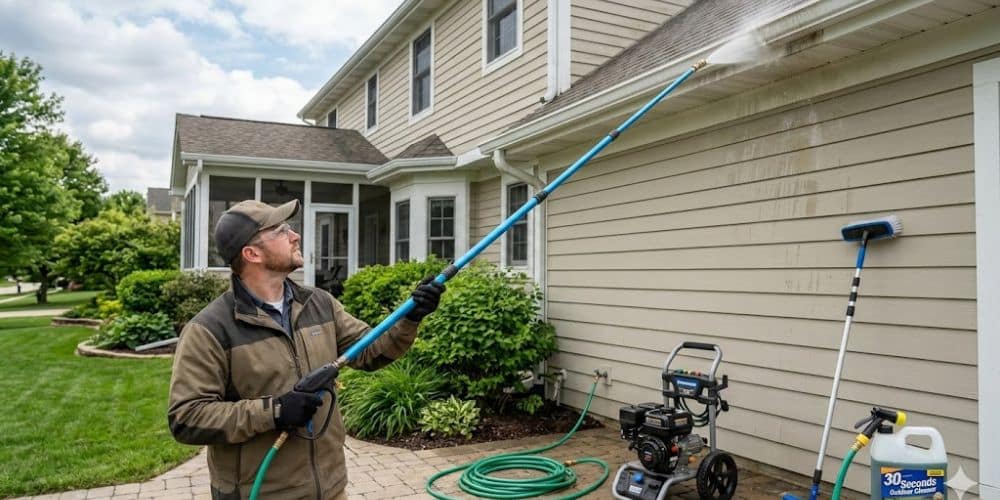
This is the safest and most searched method, especially for two-story homes, and works best for light to moderate staining on aluminum gutters.
Tools That Work From the Ground
- Gutter Cleaning Wand (Garden Hose Attachment)
Ideal for 1-story homes. Curved wands let you rinse the exterior from below. - Extendable Scrub Brush (Pole Attachment)
The key is using a soft-bristle brush with a telescoping pole so you can apply light agitation safely. - Pressure Washer + 10-Foot Extension Wand (like AgiiMan)
Lets you reach second-story gutters while standing on the ground. - 30 Seconds Outdoor Cleaner (Hose-End Sprayer)
This product applies directly from ground level and works well for mildew and organic buildup.
Also Read: Best Tools for Cleaning Your Gutters
Follow the given steps:
Step 1: Select the Right Ground-Based Tool
Start by choosing a tool that allows you to reach the gutter exterior safely from the ground. For one-story homes, a curved gutter cleaning wand attached to a standard garden hose is usually sufficient. For two-story homes, a pressure washer with an extension wand (8–12 feet) provides the necessary reach.
Make sure the attachment allows controlled spraying uncontrolled pressure can dent aluminum or force water behind fascia boards.
Step 2: Pre-Rinse the Gutter Surface
Before applying any cleaner, rinse the exterior of the gutter thoroughly. This removes loose dust, pollen, and surface debris that could interfere with chemical effectiveness.
A proper rinse also helps you see the true stain type whether it’s oxidation, tiger striping, or organic buildup so you don’t waste time using the wrong cleaner.
Step 3: Apply the Cleaning Solution Evenly
Apply your chosen cleaner starting at the bottom section of the gutter and work upward. Spraying bottom-to-top prevents streaking and ensures even dwell time across the surface.
Allow the cleaner to sit for 5–10 minutes so it can break down oils, oxidation, or electrostatic bonding. Do not allow the solution to dry, especially in direct sunlight, as this can leave residue marks.
Step 4: Agitate Using an Extendable Soft-Bristle Brush
Attach a soft-bristle brush to a telescoping pole and gently scrub the stained areas. Use light to moderate pressure in circular motions, focusing on visible streaking.
Avoid stiff brushes or abrasive pads. Aluminum gutters scratch easily, and micro-scratches make future staining worse by increasing surface adhesion.
Step 5: Rinse Thoroughly From Top to Bottom
Rinse the entire section from top to bottom using steady, even pressure. Make sure no chemical residue remains on the surface.
After rinsing, inspect the finish. If streaks remain, a specialty tiger-stripe remover may be necessary rather than repeating the same cleaner.
Ladder vs. Ground Gutter Cleaning Comparison
| Factor | Ladder Method | Ground Method |
| Safety | Medium–High Risk | Low Risk |
| Cost | Low | Moderate (tools required) |
| Effectiveness | High (manual scrubbing) | Moderate–High |
| Time Required | Moderate | Fast |
| Skill Level | Medium | Low–Medium |
Overall Score (Safety + Practicality): Ground Method Wins for Most Homeowners
Pro Tip:
If you can clean effectively from the ground, do it. Falls from ladders remain among the most common causes of household injuries, according to the Centers for Disease Control and Prevention.
Method 2: How to Clean Outside of Gutters With a Pressure Washer
Yes—you can pressure-wash aluminum gutters. But it must be done correctly.
Correct Settings:
- PSI Range: Do not exceed 1,200–1,500 PSI
- Nozzle Tip: 25-degree tip
- Spray Angle: Slight downward angle only
- Never Spray Upward Under the Fascia
Follow the given steps:
Step 1: Set Proper Pressure and Nozzle
Adjust your pressure washer to stay between 1,200 and 1,500 PSI for aluminum gutters. Anything higher increases the risk of denting or paint removal.
Use a 25-degree nozzle tip to create a wide, controlled spray pattern. Narrow tips concentrate pressure too intensely and can cause visible damage.
Step 2: Maintain Safe Spray Angle
Always aim the spray slightly downward and away from the roofline. Spraying upward can force water under shingles or behind fascia boards, potentially causing hidden moisture damage.
Keep the nozzle approximately 12–18 inches away from the surface to prevent concentrated impact.
Step 3: Use Controlled, Continuous Motion
Move the wand in smooth, overlapping passes across the gutter face. Do not hold the spray in one spot, as this can strip protective coating or leave uneven cleaning marks.
Work in sections and visually inspect each pass before moving to the next.
Step 4: Inspect Immediately After Cleaning
Once finished, inspect for signs of paint lifting, exposed metal, seam separation, or water intrusion. Pressure washing sometimes exposes underlying issues that were hidden beneath dirt buildup.
Addressing these early prevents long-term fascia or soffit damage.
Pro Tip:
Always test pressure on an inconspicuous section first. Aluminum dents easily, and high pressure can force water behind fascia boards.
Method 3: Cleaning With a Ladder by Hand (Manual Scrubbing)

This is the most thorough method but carries the highest risk.
What You’ll Need:
- Extension ladder on stable ground
- Soft-bristle brush
- Bucket + cleaning solution
- Gloves and eye protection
- Tarp for landscaping protection
Step 1: Position the Ladder Correctly
Place your extension ladder on stable, level ground and ensure it extends at least three feet above the roofline for balance. Use ladder stabilizers if available to prevent denting the gutter edge.
Never lean excessively to either side. Climb down and reposition instead of overreaching.
Step 2: Pre-Rinse to Remove Loose Debris
Use a garden hose to rinse away loose dirt and dust. This prevents unnecessary scrubbing and helps your cleaning solution penetrate effectively.
Pre-rinsing also reduces the amount of chemical required, protecting both your gutters and landscaping.
Step 3: Apply the Correct Cleaner for the Stain Type
Apply a stain-specific cleaner directly to the affected section. For tiger stripes, use a dedicated remover. For mildew, apply a diluted bleach-based solution. For hard water stains, vinegar may be sufficient.
Allow proper dwell time according to product instructions. Do not rush this stage chemical breakdown is what does most of the work.
Step 4: Scrub in Small Sections
Work in manageable 2–3 foot sections using a soft-bristle brush. Apply steady but controlled pressure to lift staining without damaging the finish.
Avoid excessive force. Over-scrubbing can remove factory coating and lead to premature oxidation.
Step 5: Rinse and Evaluate the Finish
Thoroughly rinse the cleaned section and examine the surface under natural light. If streaking persists, it may indicate oxidation rather than surface dirt.
If you notice loose fasteners, seam separation, or sagging, cleaning alone will not resolve those structural concerns.
Avoid steel brushes or abrasive pads — they permanently scratch aluminum.
Pro Tip:
Reposition the ladder frequently. Never lean sideways beyond your center of gravity.
Best Cleaning Solutions by Stain Type
Generic advice doesn’t work. Here’s what actually works.
For Tiger Stripes (Electrostatic Bonding)
Tiger stripes form when asphalt shingle runoff bonds to anodized aluminum.
Effective Products:
- Gutter Zap
- Gutter Butter (biodegradable, 10:1 dilution)
- Krud Kutter (widely available at The Home Depot)
- Gutter Grenade
- Fantastik All Purpose Cleaner
- Simple Green (budget option)
Household vinegar will NOT remove tiger stripes effectively.
For Mold & Mildew (Professional Formula)
DIY Mix:
- 1 part laundry detergent
- 2 parts TSP
- 12 parts bleach
- 36 parts water
Always protect landscaping and rinse thoroughly.
For Hard Water Stains
Equal parts white vinegar and warm water.
Let sit 10–15 minutes before scrubbing.
For Oxidation
Light oxidation: vinegar or mild abrasive paste
Heavy oxidation: dedicated aluminum brightener (far more effective)
Pro Tip:
Always apply cleaner bottom-to-top and rinse top-to-bottom to prevent streaking.
How Often Should You Clean the Outside of Gutters?
Minimum: Twice per year
If near trees: 3–4 times per year
High UV regions accelerate oxidation, so annual inspection is recommended even if staining appears minor.
FAQs
What removes black tiger stripes from gutters?
Gutter Zap, Krud Kutter, or Gutter Butter are specifically formulated for tiger stripe removal. Household cleaners rarely work because tiger stripes form an electrostatic bond between asphalt runoff and aluminum.
How do you clean the outside of gutters without a ladder?
Use a hose-end cleaner like 30 Seconds Outdoor Cleaner, apply from ground level, agitate with an extendable soft-bristle brush, then rinse thoroughly using a gutter wand.
Can you pressure wash the outside of gutters?
Yes, but keep PSI below 1,500 and use a 25-degree tip. Never spray upward beneath the fascia.
How often should you clean the outside of gutters?
At least twice per year. Homes near trees should be cleaned 3–4 times annually to prevent permanent staining.
What causes tiger stripes on gutters?
Electrostatic bonding between asphalt shingle runoff and anodized aluminum surfaces creates vertical black streaking.
Is vinegar good for cleaning gutters?
Vinegar works well for hard water stains and light oxidation. It does not effectively remove tiger stripes.
When Cleaning Isn’t Enough
If you notice:
- Persistent oxidation
- Peeling paint
- Seam separation
- Sagging sections
- Fastener failure
Cleaning won’t fix structural issues.
That’s where professional inspection matters.
At American Hill Country Gutters, we specialize in seamless gutter installation, repair, and system upgrades throughout San Antonio — ensuring your gutter system performs as well as it looks.
If you’re needing help with your gutters or just need a second opinion on how to clean, call American Hill Country Gutters at (210) 665-5500.